
Closing the Evidence Gap in Pediatric Post-Traumatic Headache

Most children bounce back from a concussion within about two weeks. For the smaller share whose headaches linger for months, the evidence to guide treatment has historically been thin.
In 2024, a national panel of pediatric headache specialists published the American Headache Society’s white paper synthesizing evidence from more than 30 studies on treating post-traumatic headache (PTH) in youth. As many as 8% of youth go on to experience persistent PTH lasting more than three months after a concussion.
Reena G. Rastogi, MD, director of the Concussion Clinic and clinical director of the Pediatric Headache Clinic at Barrow Neurological Institute at Phoenix Children’s, was one of 10 co-authors on the paper. It gave the group, for the first time, a shared reference point for a condition most clinicians had been managing largely instinct and small, scattered studies. But Dr. Rastogi is careful about what the white paper is and isn’t.
“It gives recommendations based on the evidence that is available, but there are treatments that have not been well-studied in the pediatric population, so it’s still reasonable for clinicians to use their clinical judgment in treating kids’ headaches after concussion.”
Getting Patients Through the Right Door
One of the most common questions Dr. Rastogi hears from referring physicians is simple: Where should this patient go for treatment? At Phoenix Children’s, the answer depends on how much time has passed since the injury and what symptoms remain.
Patients within three months of a concussion, who are typically managing several symptoms at once and working toward a return to school and activity, are seen in the Concussion Clinic. It brings together Sports Medicine and Neurology so a sports-related injury, a fall or car accident all land with the right team from the start. Once patients are in the clinic’s care, they can be seen frequently to make sure return to school and return to activity are going well.
For patients who are not recovered within four to six weeks and still managing headaches alongside return-to-school and return-to-sport challenges, the multidisciplinary Concussion Clinic offers a more intensive option. It brings Neurology, Sports Medicine and Neuropsychology together in a single visit, so families aren’t moving between multiple appointments when time matters most.
Patients who are three months or more out and still dealing with the full constellation of post-concussive symptoms – which can include sleep changes, cognitive fog and mood shifts, not just headache – are treated by Phoenix Children’s Neurology. But if headache has become the main, or only, remaining symptom by that three-month mark, that’s when the Pediatric Headache Clinic is the right fit.
The timing matters for referring physicians too. Dr. Rastogi’s team works to see Concussion Clinic patients within two to four weeks. By contrast, it takes longer to get an appointment for the Headache Clinic or General Neurology. That gap, she said, is exactly why what happens in the primary care office in the meantime matters so much.
What to Do While Referring Physicians Wait
The single-highest-evidence intervention available for concussion, according to guidance from the Centers for Disease Control and Prevention, isn’t a medication or a procedure. It’s education. Simply helping a child and family understand what to expect, and why symptoms are happening, measurably shortens the road to recovery. That is something any referring physician can start on day one, long before a specialist appointment.
A few risk factors are worth flagging early, since they tend to predict a longer recovery:
- A high number of acute symptoms beyond headache
- A personal or family history of migraine
- A pre-existing mood disorder
- Adolescent age
- Female sex
Patients with several of these may benefit from an earlier referral rather than a wait-and-see approach.
Medication guidance matters more than most providers and families realize, Dr. Rastogi said. In the first 48 hours, she generally recommends acetaminophen and reserves ibuprofen for cases where bleeding risk is clearly low and a physician has weighed in. After 48 hours, NSAIDs are fine, but the frequency has to be watched. Once a child is using over-the-counter pain relievers more than two or three days a week for a few months running, that pattern itself can start generating rebound-style headaches. That is known as medication-overuse headache. At that point, she explained, the fix is preventive treatment, not more analgesics.
A few symptoms are cause to bypass the referral process entirely and send the child straight to the emergency department. These include:
- Intractable or recurrent vomiting
- Any loss or decrease in consciousness
- A headache that is severe and getting progressively worse
- Any abnormal finding on a basic neuro exam
Balance – tandem gait and Romberg sign, specifically – can often be abnormal in the acute phase after the concussion. It is important to make sure the patient does not have additional abnormalities on the neurological exam.
From Naproxen Bridges to Nerve Blocks
When a headache persists past two weeks, Dr. Rastogi’s first move is usually a long-acting NSAID like naproxen, scheduled around the clock for about a week to try to break the cycle. This is what she calls a naproxen bridge.
“There’s no published evidence behind that specific protocol,” she said. “It’s something I’ve been doing since early in my practice, and we’re now running a retrospective study to see whether the outcomes back it up.”
If headaches are still happening more than once or twice a week after two to four weeks, treatment escalates to prevention. That means supplements, tricyclic antidepressants, topiramate or propranolol are chosen based on review of other post-concussion symptoms and medication side effect profiles. For example, amitriptyline (a tricyclic antidepressant) can cause sedation, which may be beneficial if a child is having difficulty sleeping after the concussion. It is important to start a low dose of a preventive medication and titrate the dose slowly over the course of a few weeks. For cases that don’t respond, the team has more tools available, such as sphenopalatine ganglion blocks and other nerve block procedures, medications that target calcitonin gene-related peptide (CGRP), onabotulinumtoxinA, remote external neurostimulation and cognitive behavioral therapy through the Headache Clinic.
Dr. Rastogi tells her patients that after 48 hours of complete rest, they should start some low-impact physical activity as part of the treatment plan. For over a decade, evidence has supported non-contact, sub-symptom threshold aerobic activity that, when started early, actually speeds recovery.
An Access Problem Hiding in the Data
The white paper also pushed the field to look at something the pediatric literature on post-traumatic headache has mostly overlooked: who has access to good care in the first place. Studies cited in the paper found that Black patients with concussion have experienced reduced access to concussion-specific resources, and in some emergency department settings, have been triaged at lower acuity than White patients. The evidence specific to children is still thin, but Dr. Rastogi said this deserves more attention.
“Access to care can be a real barrier for certain populations,” she said. “The delay in getting early education and counseling can mean a longer, harder recovery.”
One way the Phoenix Children’s Headache Program helps address this problem is by running a half-day telemedicine concussion clinic, which lets families outside the Phoenix metro area, including those in rural parts of Arizona, get care without traveling long distances. “It’s not a targeted fix for the disparities in the literature,” Dr. Rastogi said, “but it’s a meaningful piece of the access puzzle.”
The program is also building a concussion outcomes dashboard, expected in 2027, that will track referral volume, recovery time and treatments started. Once it’s live that data should help both Dr. Rastogi’s team and referring physicians understand this population better than they do today.
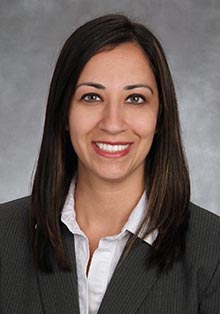
Reena G. Rastogi, MD
Refer a Patient or Request a Consult
The Concussion Clinic, Concussion Physician Multidisciplinary Clinic and Pediatric Headache Clinic at Barrow Neurological Institute at Phoenix Children’s provide comprehensive, multidisciplinary care for children and adolescents with post-traumatic headache. To refer a patient or request a consultation, call 602-933-KIDS (5437) or submit a referral online.
Reena G. Rastogi, MD, Director, Concussion Clinic; Clinical Director, Pediatric Headache Clinic, Barrow Neurological Institute at Phoenix Children’s
Dr. Rastogi completed her pediatric neurology fellowship at Phoenix Children’s Hospital and Barrow Neurological Institute and directs the Headache Medicine Fellowship Program. She is board certified in child neurology and headache medicine and focuses her practice on migraine, concussion and post-traumatic headache in children and teens.
Source
Patterson Gentile C, Rosenthal S, Blume H, et al. American Headache Society white paper on treatment of post-traumatic headache from concussion in youth. Headache. 2024;64(9):1148-1162.
Lumba-Brown A, Yeates KO, Sarmiento K, et al. Centers for Disease Control and Prevention Guideline on the Diagnosis and Management of Mild Traumatic Brain Injury Among Children. JAMA Pediatr. 2018 Nov 1;172(11):e182853. https://pubmed.ncbi.nlm.nih.gov/30193284/