
Direct-to-OR Pathway Cuts Time to Surgery by 67% for Adolescents with Testicular Torsion

Key Takeaways
- Transferred patients ages 12 to 18 with ultrasound-confirmed testicular torsion bypass the Phoenix Children’s emergency department and go directly to the preoperative area for surgery.
- Mean time from registration to surgery start fell from 70 minutes to 23 minutes, a 67% decrease (p < 0.0001).
- Orchiectomy and atrophy rates did not differ significantly. The authors noted that patient-limited factors, such as delays in recognizing symptoms and in getting initial care, may have influenced these outcomes.
For adolescents transferred with confirmed testicular torsion, skipping evaluation in the receiving emergency department (ED) cut mean time to surgery by two-thirds. A retrospective review published in the Journal of Pediatric Urology compared 71 patients transferred to Phoenix Children’s from outside hospitals before and after an ED bypass pathway was introduced. Phoenix Children’s urologists Michael Yap, MD, and Gwen Grimsby, MD, et al, co-authored the study.
Transferred patients often face long ischemia times because of the interhospital transfer and repeat assessments in the receiving ED. “The likelihood of irreversible injury increases significantly with time, particularly after approximately 6–12 hours,” Dr. Grimsby said.
How the Pathway Works
- Eligibility: Patients ages 12 to 18 whose torsion has been confirmed at the referring facility by scrotal ultrasound showing no blood flow to the affected testicle.
- Before the pathway: Transferred patients were evaluated by providers in the Phoenix Children’s ED before going to the OR.
- Now: Eligible patients go directly to the preoperative area and on to the OR. This also frees ED space and staff for other patients.
What the Study Found

Gwen Grimsby, MD
The study compared a pre-pathway group (January to December 2022) with a post-pathway group (August 2023 to September 2024).
- Time to surgery: Mean time from registration to OR start was 70 minutes before the pathway and 23 minutes after (p < 0.0001).
- Orchiectomy: 28% before and 14% after. The difference was not statistically significant (p = 0.2454).
- Testicular atrophy at follow-up: 15% before and 17% after (p = 1.0).
- Age: Patients in the post-pathway group were older, at 15 years vs. 13 years (p = 0.0025).
The authors pointed to patient-limited factors, including delays in recognizing symptoms and in getting initial care, as likely influences on testicular salvage rates. They concluded that cutting ischemia time still matters clinically and supports refining and expanding the pathway. “Unfortunately, many patients wait too long after the onset of symptoms before seeking medical care,” Dr. Grimsby said.
When the ED Is Still the Right Destination
Patients younger than 12, patients with equivocal ultrasound findings and patients with confounding diagnoses such as trauma, infection, hernia or recent surgery may need ED evaluation first. In these cases, the on-call urology team decides the most appropriate destination.
Clinical Implications for Your Practice
- Direct-to-OR transfer requires a scrotal ultrasound showing no blood flow to the affected testicle. If findings are unclear, call anyway to discuss the case with the on-call urology team.
- While awaiting transfer, keep IV access in place, keep the patient NPO and tell the family the patient is going to Phoenix Children’s for surgery.
- Not every patient with torsion has testicular pain. Male patients seen in the ED with hip, groin or abdominal pain should always have a thorough genitourinary exam.
How to Refer
To activate the pathway, call the Phoenix Children’s Connected Care Center, staffed 24/7, at 602-933-3627. The center connects referring providers with the on-call urology team to discuss the case and confirm eligibility for direct transfer to the OR. For nonurgent referrals to the Division of Urology, call 602-933-KIDS (5437) or submit a referral online.
About the Authors
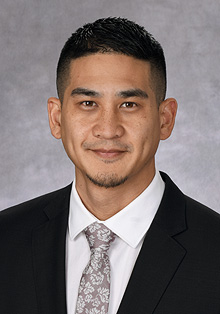
Michael Yap, MD
Division Chief, Urology, Phoenix Children’s
Dr. Grimsby is chief of the Division of Urology at Phoenix Children’s and senior author of the study. She is board-certified in urology with subspecialty certification in pediatric urology from the American Board of Urology. She completed her urology residency at Mayo Clinic in Phoenix and her pediatric urology fellowship at Children’s Medical Center/UT Southwestern Medical Center in Dallas. She created the Phoenix Children’s Urology Transition Clinic for young adults with complex congenital urologic conditions and has published more than 70 articles and book chapters.
Pediatric Urologist, Phoenix Children’s
Dr. Yap is a pediatric urologist in the Division of Urology at Phoenix Children’s and a co-author of the study. He is board-certified in urology with subspecialty certification in pediatric urology from the American Board of Urology. He earned his medical degree from Creighton University, completed his residency at the University of New Mexico and completed his fellowship at Rady Children’s Hospital in San Diego. He sees patients at Phoenix Children’s Hospital – Thomas Campus, Phoenix Children’s Specialty Care – Arrowhead Campus and Phoenix Children’s Specialty Care – Avondale Campus.
Sources
Hassen R, et al. Bypassing the emergency department for testicular torsion. Journal of Pediatric Urology. 2026. PubMed ID 42391729. https://doi.org/10.1016/j.jpurol.2026.106078