
National Leaders Support Updated Pediatric Fasting Practices

For eligible children having elective anesthesia, current evidence supports clear liquids until one hour before induction. For your practice, that means encouraging families to keep offering clear liquids up to the cutoff time provided by the child’s anesthesia team – not stopping fluids overnight or “to be safe.”
Amod Sawardekar, MD, associate division chief of Anesthesiology and director of Perioperative Services at Phoenix Children’s, and Narasimhan Jagannathan, MD, division chief of Anesthesiology, co-authored a 2026 editorial in the British Journal of Anaesthesia making this case.
“We should not promise that shorter fasting prevents every complication, but avoiding unnecessary fasting is a practical way to improve the child’s experience and support appropriate hydration,” said Dr. Jagannathan.
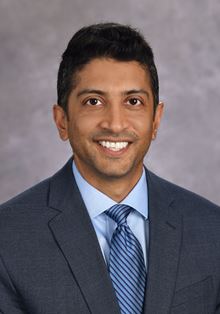
Amod Sawardekar, MD,
For your patients, it means less thirst and distress with no known increase in aspiration risk. You should request anesthesia input before the procedure day for children with suspected bowel obstruction, delayed gastric emptying, active vomiting, diabetes or metabolic disorders, or when fasting instructions conflict.
“The safety data are now strong enough to warrant putting new policies in place,” Dr. Sawardekar said. “The question is no longer whether one-hour clear-liquid fasting is reasonable. It’s how to implement it so every eligible child benefits.”
What the Evidence Shows
The EUROFAST international cohort study included 306,900 anesthetics across 31 centers. Confirmed pulmonary aspiration occurred at about 0.96 per 10,000 anesthetics under one-hour policies, compared with 1.83 per 10,000 under two-hour policies. Shorter fasting met the study’s noninferiority criterion, with no aspiration-related deaths. These findings are reassuring, although the observational design does not establish that shorter fasting prevents aspiration.
A systematic review of eight randomized trials involving 1,234 children likewise found no increased aspiration risk with clear-liquid fasting of one hour or less.
“Taken together, the evidence supports shorter fasting with appropriate clinical judgment and ongoing safety monitoring,” Dr. Jagannathan said.
Why Children Still Fast Too Long
Policy alone doesn’t shorten fasting. Longstanding habits, unclear or differing instructions, and procedure delays can stretch a short requirement into many hours. A study at Meyer Children’s Hospital in Italy showed median clear-liquid fasting remained about three hours after it adopted a one-hour policy.
Prolonged fasting causes thirst, hunger, irritability and distress for a patient. It also can contribute to dehydration and metabolic stress, particularly in younger or medically vulnerable children. Research from Children’s Hospital of Philadelphia found an association between longer fluid fasting and low blood pressure after anesthesia induction, although the relationship wasn’t consistent across all durations.
“Evidence and guidelines alone do not change a child’s experience,” Dr. Jagannathan explained. “Families also need clear instructions, encouragement to offer clear liquids and an updated plan when the schedule changes.”
How to Counsel Families
Dr. Jagannathan suggested providing this message to families: “Food, milk and clear liquids have different fasting requirements. Follow the instructions from your child’s anesthesia and procedural teams, and encourage permitted clear liquids until the stated cutoff time. Contact the team if instructions conflict or the procedure is delayed.”
Clear liquids include water, pulp-free apple juice and approved clear electrolyte drinks. Milk, formula and smoothies aren’t clear liquids. The one-hour window applies to clear liquids only – it doesn’t shorten fasting times for food, breast milk or formula. Families should receive an explicit clock time rather than calculating the interval themselves.
When to Request Anesthesia Input
Contact the team coordinating the procedure and request an individualized anesthesia plan when a child has:
- Suspected bowel obstruction, significant delayed gastric emptying, active vomiting or another reason to avoid oral intake
- Diabetes or a metabolic disorder that requires a specific fluid, glucose or medication plan
- A procedure with added requirements, such as certain nuclear medicine studies or bowel preparations
- Conflicting or unclear fasting instructions
Raising questions early lets the team address medical conditions, feeding needs and medications before the procedure day.
How Phoenix Children’s Is Putting It Into Practice
Phoenix Children’s is working toward a one-hour clear-liquid fasting policy. It requires coordinating clinics, pre-screening calls, written materials and day-of-procedure teams so families hear one consistent message. When a procedure is delayed, the anesthesia team can reassess and, if appropriate, authorize additional clear liquids with an updated cutoff time.
“Every child’s distress or cancellation that we can avoid matters to a family who has rearranged work, school and childcare to be here,” Dr. Sawardekar said. “Our job is to make instructions simple enough for families to follow with confidence – and to have a plan ready when the day doesn’t go as scheduled.”
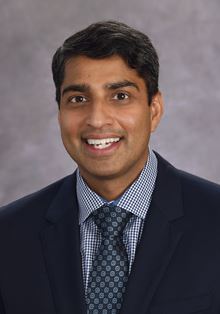
Narasimhan Jagannathan, MD,
Until the policy is implemented, families should follow the current instructions from their procedural and anesthesia teams.
How to Refer
To refer a patient or request an anesthesia consultation, call 602-933-KIDS (5437) or submit a referral online.
About the Authors
Division Chief, Anesthesiology at Phoenix Children’s
Dr. Jagannathan completed an anesthesiology residency at Cleveland Clinic in Cleveland and a pediatric anesthesiology fellowship at Children’s Memorial Hospital/Northwestern University, now Ann & Robert H. Lurie Children’s Hospital of Chicago, where he later served as division head for general pediatric anesthesia for 17 years. He is board-certified in anesthesiology and pediatric anesthesiology, and his clinical research focuses on airway management and patient safety in children.
Associate Division Chief, Anesthesiology, and Director of Perioperative Services at Phoenix Children’s
Dr. Sawardekar completed an internship and anesthesiology residency at Rush University Medical Center in Chicago and a pediatric anesthesiology fellowship at Children’s Memorial Hospital/Northwestern University, now Ann & Robert H. Lurie Children’s Hospital of Chicago. He also serves as the inaugural program director of the Pediatric Anesthesiology Fellowship Program at Phoenix Children’s. He is board-certified in anesthesiology and pediatric anesthesiology and has a special interest in acute pain management, regional anesthesia and pediatric airway management.
Sources
Rowland MJ, Sawardekar A, Jagannathan N. Sip, don’t skip: implementing 1-hour fasting in paediatric anaesthesia. British Journal of Anaesthesia. 2026;136:812-815. https://pubmed.ncbi.nlm.nih.gov/41513519/.
Frykholm P, et al. Impact of liberal preoperative clear fluid fasting regimens on the risk of pulmonary aspiration in children (EUROFAST): an international prospective cohort study. British Journal of Anaesthesia. 2025;135:141-147. https://pubmed.ncbi.nlm.nih.gov/40410101/.
Dabke T, Scott TE, Taylor B. Impact of preoperative fasting duration on perioperative complications in elective paediatric procedures: a systematic review and meta-analysis. British Journal of Anaesthesia. 2026;136:158-166. https://pubmed.ncbi.nlm.nih.gov/41314944/.
Frykholm P, et al. Pre-operative fasting in children: A guideline from the European Society of Anaesthesiology and Intensive Care. European Journal of Anaesthesiology. 2022;39:4-25. https://pubmed.ncbi.nlm.nih.gov/34857683/.
Ricci Z, et al. Preoperative clear fluids fasting times in children: retrospective analysis of actual times and complications after the implementation of 1-h clear fasting. Journal of Anesthesia, Analgesia and Critical Care. 2024;4:12. https://doi.org/10.1186/s44158-024-00149-3.
Simpao AF, et al. Preoperative Fluid Fasting Times and Postinduction Low Blood Pressure in Children: A Retrospective Analysis. Anesthesiology. 2020;133:523-533. https://pubmed.ncbi.nlm.nih.gov/32433278/.