
Rethinking Access in Pediatric Neuropsychology

There are simply not enough of us.
Across the country, the number of fellowship-trained pediatric neuropsychologists has not kept pace with the number of children who need us. Training programs remain limited, and the path into this specialty hasn’t grown fast enough to meet rising clinical demand. At most children's hospitals, waiting months or even years for a neuropsychological evaluation became the norm, not the exception. For a child newly diagnosed with a brain tumor, a patient experiencing symptoms following a head injury, or a kid whose epilepsy team needed input before adjusting a care plan, that wait had real consequences. This could mean delays in identifying supports a child needs to recover, resulting in lasting symptoms; prolonged time out of school, or a return without appropriate accommodations; or even postponement of surgical intervention in certain cases.
Families – many already managing a complex medical condition – cleared an entire day from work and school for an evaluation whose purpose they didn't yet fully understand, while referring providers had to wait several months for answers. Our own limited capacity was absorbed by long, standardized testing days that weren't always matched to the clinical question in front of us.
When a resource as scarce as a fellowship-trained pediatric neuropsychologist is used the same way for every child, the system reaches fewer families than it could. The families it does reach wait longer than they should.
A Consult-First Model
We redesigned the front door.
Today, neuropsychology referrals at Phoenix Children’s begin with a 60-minute consultation rather than an automatic testing day. Most of these visits happen over telehealth. In that visit, we conduct a clinical intake and neurobehavioral status examination, review records that are not included in the medical chart, such as prior school evaluations, and give families a clear picture of what neuropsychology is and what to expect for their unique situation. We can collaborate with caregivers and gain an understanding of their concerns and perspective to help us tailor our plan, instead of assuming a plan based on records alone. Sometimes targeted testing can be conducted virtually during this consultation, answering referral questions right then and there. If lengthier or in-person testing is needed, we can then decide how much is necessary and work with the family to figure out the easiest scheduling options to minimize the burden on them (e.g., schedule testing on days their child has early release from school, before or after another appointment at the hospital to reduce trips, or around naptimes for younger children).
When further testing is not necessary, we can provide much quicker recommendations to ensure timely support for patients. When further testing is needed, we can often get families started on recommendations in the meantime. Scheduling the intake and neurobehavioral status examination ahead of time also shortens an otherwise lengthy in-person appointment. This makes the actual testing day run more smoothly and can help put kids who may be anxious about hospital visits at ease by allowing them to get to know their provider ahead of time. As a result, overall patient satisfaction has exceeded National Research Corporation (NRC) ambulatory benchmarks, reflecting a highly positive patient and family experience.
The process changes, but the quality of care does not. What changes most is the clinical picture we begin with. A consultation can also surface something a testing referral never could: Neuropsychology may not be the right specialty for this patient right now. A brief visit can identify a family that needs a mental health referral, a sleep evaluation or a school-based plan, getting them to the right care faster without unnecessary testing and keeping specialist capacity available for children who genuinely need us.
What We're Seeing So Far
We built this model with measurement in mind. In our initial pilot across several patient populations, a substantial portion of referred patients had their needs addressed through consultation alone, receiving recommendations, care coordination or direct intervention without the need for in-person testing. Among those who did proceed with further assessment, the majority moved to a targeted selection of tests designed specifically for them rather than a less individualized and longer battery. And for families who came in for testing, we were able to coordinate more than a third of those sessions alongside other scheduled medical appointments, reducing the burden of extra trips.
Since expanding the model to our neuro-oncology population, the results have continued in a positive direction. Preliminary exploration suggests that patient volumes in that group have nearly tripled without an increase in clinical full-time equivalent (FTE). Wait times have dropped from several months to roughly seven weeks, even as referral volume grew substantially. Referring providers are able to send all of their patients in need of neuropsychology support as opposed to trying to prioritize only those with the highest needs, resulting in higher provider satisfaction in addition to consistently high family satisfaction.
What This Means for Referring Physicians
For referring providers, the pathway itself has not changed. What has changed is what happens next.
Under the old model, a referral often meant a family waited several months to over a year for necessary neuropsychological care. Under the consult-first model, families are typically seen for an initial consultation within weeks. Referring providers receive earlier clinical input. The scope of any further evaluation is shaped by the actual clinical question and individual patient factors rather than a default protocol.
The most important thing I want referring providers to know is simple: Refer every patient who needs neuropsychology. There’s no reason to hold back referrals to make sure the most urgent cases are seen first. The consult-first model is built to meet that demand and match each child to the right level of care.
It also helps when providers describe our model accurately to families. Many still expect a full day of testing, and that expectation can create confusion before the first visit. When providers let families know ahead of time that the process starts with a consultation, usually over telehealth, and that the team will talk through their concerns and briefly assess their child before deciding whether testing is needed, it sets the right expectations from the start.
A strong referral still comes down to a few basics: List the primary medical diagnosis first, include relevant ICD-10 codes and a clear clinical question, and select the correct population and age (we assess children as young as 2 weeks old) to ensure patients are paired with the best clinician for them. It is also important to note the family's dominant language so we can match them with the right provider or arrange interpreter support, as we have bilingual specialists who offer assessment in Spanish and English.
A model that expands access is only equitable if it reaches the families most often left behind by the traditional one. A 60-minute virtual visit can happen from home, which is especially important for families who cannot schedule a full day of in-person testing due to time off, transportation or finding care for siblings. That's part of why the model works.
The Road Ahead
This is not a Phoenix Children's innovation in isolation. Programs at major children's hospitals across the country are arriving at the same conclusion: The field needs a different entry point for neuropsychological care. I have collaborated with colleagues at more than a dozen pediatric institutions to explore how tiered, consultation-based models are being implemented, and the data consistently point in the same direction. The question now isn’t whether this model works. It’s how quickly the field moves to adopt it.
How to Refer
To refer a patient to Phoenix Children's Neuropsychology Division, call 602-933-KIDS (5437) or submit a referral online.
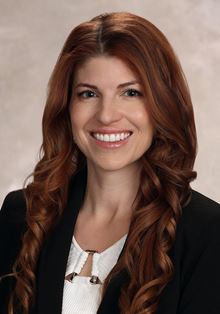
Ashley Whitaker, PhD, ABPP-CN
About the Author
Ashley Whitaker, PhD, ABPP-CN
Division Chief of Neuropsychology, Phoenix Children’s
Dr. Whitaker completed her postdoctoral fellowship in pediatric neuropsychology at the Children's Hospital of Philadelphia/University of Pennsylvania and leads Phoenix Children's Neuropsychology Division, which provides evaluation and consultation for patients with pediatric cancer, epilepsy, metabolic conditions, acquired brain injury, congenital heart defects and other complex conditions affecting the brain. Her research focuses on building access-centered care models and examining how socioeconomic factors shape cognitive outcomes in pediatric populations.
Sources
Curfman AL, et al. Telehealth: Improving Access to and Quality of Pediatric Health Care. Pediatrics. 2021;148(3):e2021053129. https://doi.org/10.1542/peds.2021-053129
Haebich KM, et al. Agreement, reliability, feasibility, and acceptability of home-based telehealth versus face-to-face pediatric neuropsychological testing: A within-person crossover study. Neuropsychology. 2025;39(2):172-186. https://doi.org/10.1037/neu0000989
Mietchen JJ, et al. Your clinical interview is data: The benefit of telehealth appointments to triage referrals made to pediatric neuropsychology. The Clinical Neuropsychologist. 2025;39(5):1266-1285. https://doi.org/10.1080/13854046.2025.2456160