
Search Videos and More
 News
News
National Leadership in Fontan Outcomes Research
A landmark study led by Phoenix Children’s Dr. Deepti Bhat and collaborators has been published in Circulation, one of the most highly regarded and influential journals in cardiovascular medicine. News
News
Mavacamten in Adolescents with Obstructive Hypertrophic Cardiomyopathy
First-in-class drug brightens outlook for those diagnosed with hypertrophic cardiomyopathy in childhood. News
News
Accuracy of Elastography Versus Biopsy in Assessing Severity of Liver Fibrosis in Young Fontan Patients
Patients born with single ventricle CHD undergo staged surgical palliation culminating in total cavo-pulmonary anastomosis (also known as Fontan or Kreutzer procedure). News
News
Safety and Utility of CardioMEMS Device for Remote Pulmonary Artery Monitoring in Paediatric Fontan Patients: A Case Series
Patients with single ventricle congenital heart disease who undergo total cavo-pulmonary anastomosis (Fontan surgery) suffer from elevated pulmonary artery pressure (PAP), which leads to multiple adverse sequelae. News
News
Early Experience Using Implanted Hemodynamic Monitor (CardioMEMs) for Hemodynamic Assessment during Exercise in Pediatric Patients with Fontan Circulation
We report our experience with 4 children, in whom implanted hemodynamic monitor was utilized to assess Fontan pressures during exercise. News
News
An Update of Invasive Implanted Hemodynamic Monitoring in Patients With Fontan Circulation
What are the safety, utility, and prognostic implications of invasive implanted hemodynamic monitoring (IHM) using the CardioMEMS™ HF System (Abbott Laboratories, Abbott Park, Illinois) in patients with Fontan circulation (FC)? News
News
Morbidity and Mortality in Adult Fontan Patients After Heart or Combined Heart-Liver Transplantation
An increasing number of adult Fontan patients require heart transplantation (HT) or combined heart-liver transplant (CHLT); however, data regarding outcomes and optimal referral time remain limited. News
News
Clinical Outcomes of Adult Fontan-Associated Liver Disease and Combined Heart-Liver Transplantation
The impact of Fontan-associated liver disease (FALD) on post-transplant mortality and indications for combined heart-liver transplant (CHLT) in adult Fontan patients remains unknown.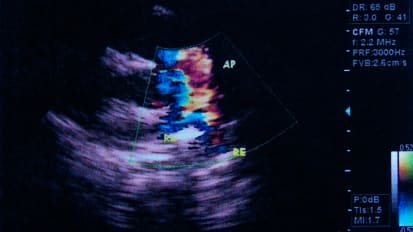 News
News
Congenital Heart Surgery Outcomes in Patients with Positive Respiratory Viral Swabs
To examine whether or not viral positive patients experienced worse outcomes and assess differences in surgical outcomes between viral-positive patients with and without viral symptoms within 30 days of surgery. News
News
Research & Innovation: Expanding the Boundaries of Pediatric and Adult Cardiac Patient Care and Treatments
Information is at the core of Phoenix Children's Center for Heart Care's healthcare research and innovation. Here, the team pools data from its own surgeries and procedures with those from other national facilities, giving its doctors an understanding of how they are performing and how they can lmprove. News
News
Risk Factors For 1-Year Allograft Loss in Pediatric Heart Transplant Patients Using Machine Learning: An Analysis of the Pediatric Heart Transplant Society Database
Pediatric heart transplant patients are at greatest risk of allograft loss in the first year. We assessed whether machine learning could improve 1-year risk assessment using the Pediatric Heart Transplant Society database. News
News
Coronary Disease and Modifying CV Risk in Adult CHD Patients
There are >1.4 million adult congenital heart disease (CHD; ACHD) patients living in the United States. Coronary artery disease (CAD) is at least as prevalent in ACHD patients as in the general population and has become a leading cause of their mortality.