
Search Videos and More
 Document
Variation in Prenatal Surveillance and Management of Anti-SSA/Ro Autoantibody Positive Pregnancies
Dr. Melanie Gropler co-authored this original article published in the Journal of Maternal-Fetal and Neonatal Medicine. Video
Video
Cardiac Evaluation and Potential for Prenatal through Postnatal Therapy
Dr. Lindblade led a discussion related to high risk fetal conditions (eg, sacrococcygeal teratoma, vein of Galen malformation, placental chorioangioma, etc.) and their cardiovascular implications. Video
Video
Systemic Corticosteroids – Timing is Everything
Dr. Amy Brown presented on how the timing of use of systemic corticosteroids may prevent BPD and/or more effectively treat the manifestations of BPD. Video
Video
Congenital Diaphragmatic Hernias
Congenital diaphragmatic hernia occurs in approximately every 1-in-5,000 births. Dr. Mark Molitor explores the evolution of how we treat congenital diaphragmatic hernias and why this often includes ECMO. Video
Video
Fetal Anomalies & Perinatal Mental Health Implications for Practice
Strengths-based, trauma-informed care is key to the clinical approach our team at Phoenix Children’s uses for the unique aspects of care for expectant parents and infants.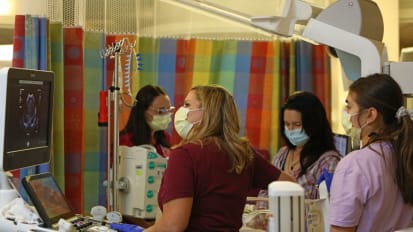 News
News
Retrospective Research Confirms that Complex Pediatric Patients with CDH Thrive with Multidisciplinary Approach to Care
CDH Program at Phoenix Children's Reveals the Positive Power of Teamwork. Video
Video
Neurological Injury Paradigm Shifts in CHD Patients
While surgical survival for complex congenital heart disease (CHD) now exceeds 90%, over half of these children still develop significant neurological dysfunction. Document
The Significance and Limitations of Pre- and Postnatal Imaging in the Diagnosis and Management of Proximal Focal Femoral Deficiency
Learn about the clinical importance and limitations in the diagnosis of proximal femoral focal deficiency (PFFD) in an exploration of three cases, varying in severity and presentation.