
Search Videos and More
 News
News
The Digital Migraine Revolution: How Headache Tracking and Digital Health Are Changing Pediatric Care
Pediatric migraine has historically been managed in fragments – symptoms recalled across months of episodic appointments. At Phoenix Children's, digital tools are reshaping care from episodic to continuous. News
News
Digital Health in Pediatric Neurology: From Episodic to Continuous Care
Digital health has emerged as a transformative force in 21st-century medicine, reshaping the boundaries of healthcare delivery. News
News
Innovative, Minimally Invasive Treatment for Drug-Resistant Epilepsy
Epilepsy remains a life-altering condition, particularly due to the unpredictable nature of seizures and their cumulative impact on cognition, independence and quality of life. News
News
Congenital CMV: The Importance of Prevention, Early Screening and Treatment
Congenital cytomegalovirus (cCMV) is the most common infectious cause of congenital disabilities in the United States, affecting about 1 in 200 infants born each year News
News
Cerebral Vasculopathy in Neurofibromatosis Type 1: An Under-Recognized Problem?
Neurofibromatosis type 1 (NF1) is a common genetic disorder caused by mutations in the NF1 gene, which encodes neurofibromin, a GTPase-activating protein (GAP)-related domain that negatively regulates the Ras/mitogen-activated protein kinase (RAS/MAPK) signaling pathway. News
News
Advancing the Care of Children with Cerebrovascular Disease
Pediatric cerebrovascular disease is a significant cause of global morbidity and mortality among children. News
News
The Future of Pediatric Epilepsy Surgery Through a Genetic Lens
Epilepsy in children continues to be a large-scale medical issue in children, affecting approximately 4 in 1,000 children each year. Epilepsy is defined as having two unprovoked, nonfebrile seizures. News
News
Hypoglossal Nerve Stimulation: A Novel Tool for Treating Obstructive Sleep Apnea in Children
Hypoglossal nerve stimulation is an advanced and emerging therapeutic approach designed to manage obstructive sleep apnea (OSA). News
News
Standardized Small Baby Care Implemented by Phoenix Children’s Neonatologists Improves Outcomes
In response to the growing number of extremely preterm infants born in Arizona, Phoenix Children’s and Dignity Health St. Joseph’s Hospital and Medical Center together created a protocol for small baby care to focus on improving outcomes among this particularly vulnerable population. News
News
Research & Innovation: Expanding the Boundaries of Pediatric and Adult Cardiac Patient Care and Treatments
Information is at the core of Phoenix Children's Center for Heart Care's healthcare research and innovation. Here, the team pools data from its own surgeries and procedures with those from other national facilities, giving its doctors an understanding of how they are performing and how they can lmprove. News
News
Laser Surgery – Changing Management and Outcomes of Hypothalamic Hamartomas/Update on Laser Surgery for Pediatric Epilepsy
Laser interstitial thermal therapy (LITT) has emerged as a promising minimally invasive treatment for hypothalamic hamartoma with much improved safety and better efficacy. The technology combines the instant effect of thermal ablation with stereotactic precision and guidance using real-time magnetic resonance thermography. At Phoenix Children’s this is now the standard of care for the treatment of hypothalamic hamartomas and many other focal epilepsies.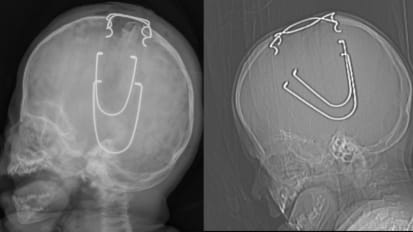 News
News
Advances In Craniosynostosis Repair
Innovations in craniosynostosis management and cranial vault remodeling have improved diagnosis, preoperative planning and treatment resulting in improved patient outcomes and more personalized care...